
Curry County Criminal Docket Searches
New Mexico Case Lookup is where a Curry County criminal court docket search starts. Pick the court type and court location first. The official instructions then have you use the case category, year, and case number. When a criminal result appears, note the displayed location and category. A Magistrate Court matter and a District Court matter do not share one record.
Lead with the most precise details you have. A court-issued number works best. The instructional format is D-202-CR-2023-0000. It shows the location, category, year, and sequence elements a number can carry. It is only a sample, not a real Curry County case. No number? Call the clerk of the court most likely to hold the file. The public instructions also describe an attorney search. They do not offer a general name-search field for every user. Pair the Curry County court location with the Curry County criminal category and case number.
- Open New Mexico Case Lookup and select the court type and Curry County court location that fit the matter.
- Use the displayed criminal category, year, and case number when those details are known.
- Compare the result's court location, case type, filed date, and status with the information in hand.
- Read the docket entries and hearing details, while treating a missing attachment as unavailable rather than absent.
- Ask the responsible Curry County clerk for inspection, a copy, or a certified record when the docket alone is not enough.
Note: A Curry County criminal court docket search may return only case metadata, without every filing or attachment shown online.
Curry County Criminal Case Results
A public criminal result is a case record. It is not an arrest-history database. In an authorized re:SearchNM profile, the Case Details and Related Cases tabs can display a filed date, case number, case style, location, case type, and related reason. The Charges tab can list a sequence, offense date, description, statute if available, degree, and disposition. The public level may show less. Treat a blank field as blank, not as a conclusion.
That gap matters in Curry County. The docket, or register of actions, is just one layer of the court file. New Mexico's access policy requires redaction of online documents, and digitization varies across courts. A docket line may name an order, setting, or filing while the document itself needs a clerk request or stays out of public view. Keep the court's exact labels, above all for status and disposition. Read a Curry County District result, Curry County Magistrate result, Curry County municipal result, and Curry County court location together.
| Result area | What the official interface may show | What it does not establish |
|---|---|---|
| Case Details | Case number, style, location, type, filed date, and status | That every paper or digital filing is visible |
| Charges | Sequence, offense date, description, degree, and disposition when available | A complete history outside the court record |
| Related Cases | Related case and related reason in registered access | That cases have identical parties or outcomes |
Criminal Dockets: What They Show
A Curry County criminal docket usually opens with key header facts. These include the court location, division, case number, category, case style, filed date, and an open or closed status. From there it logs filings, hearings, continuances, orders, service, judgments, and administrative events. The Ninth Judicial District's published hearing calendar helps with a single setting. It cannot replace the full register of actions in a Curry County criminal file.
Charge details often run deeper than the case header. The official guide lists a charge sequence, alleged offense date, description, statute number when available, degree, and disposition. A status marked open or closed is the system's filter. It is not a finding of guilt. It does not promise every obligation is finished. Case Lookup does not carry bond, restitution, costs, or payment history as public Curry County fields. The Curry County court location, division, filing date, and charge fields give each entry its context.
| Case number | A court identifier; the official example D-202-CR-2023-0000 is instructional, not a local case. |
|---|---|
| Case details | Case style, location, type, filed date, status, and related-case information when shown. |
| Charge area | Sequence, offense date, description, statute if available, degree, and disposition. |
| Docket entries | Chronological filings, orders, hearing activity, service, continuances, and other register entries. |
| Access status | Whether a document is displayed, redacted, sealed, or must be requested from the clerk. |
Curry County Felony Criminal Docket Path
Felony matters belong in Curry County District Court, part of New Mexico's Ninth Judicial District. Magistrate Court plays a different role. It handles felony preliminary hearings plus misdemeanor, DWI, and traffic cases. Because of that split, a preliminary proceeding and the later District Court prosecution sit on separate criminal dockets, even for one underlying event. Curry County District Court, Curry County Magistrate Court, the Curry County clerks, and the docket locations for each are distinct record paths.
The Ninth Judicial District's judge listing names the Curry divisions and the public contact routes tied to District Court. Check it to confirm a felony docket belongs with District Court before asking a clerk for a record. A division number or courtroom notice on a Curry County criminal docket is a routing detail. It is not a shortcut to the full file.
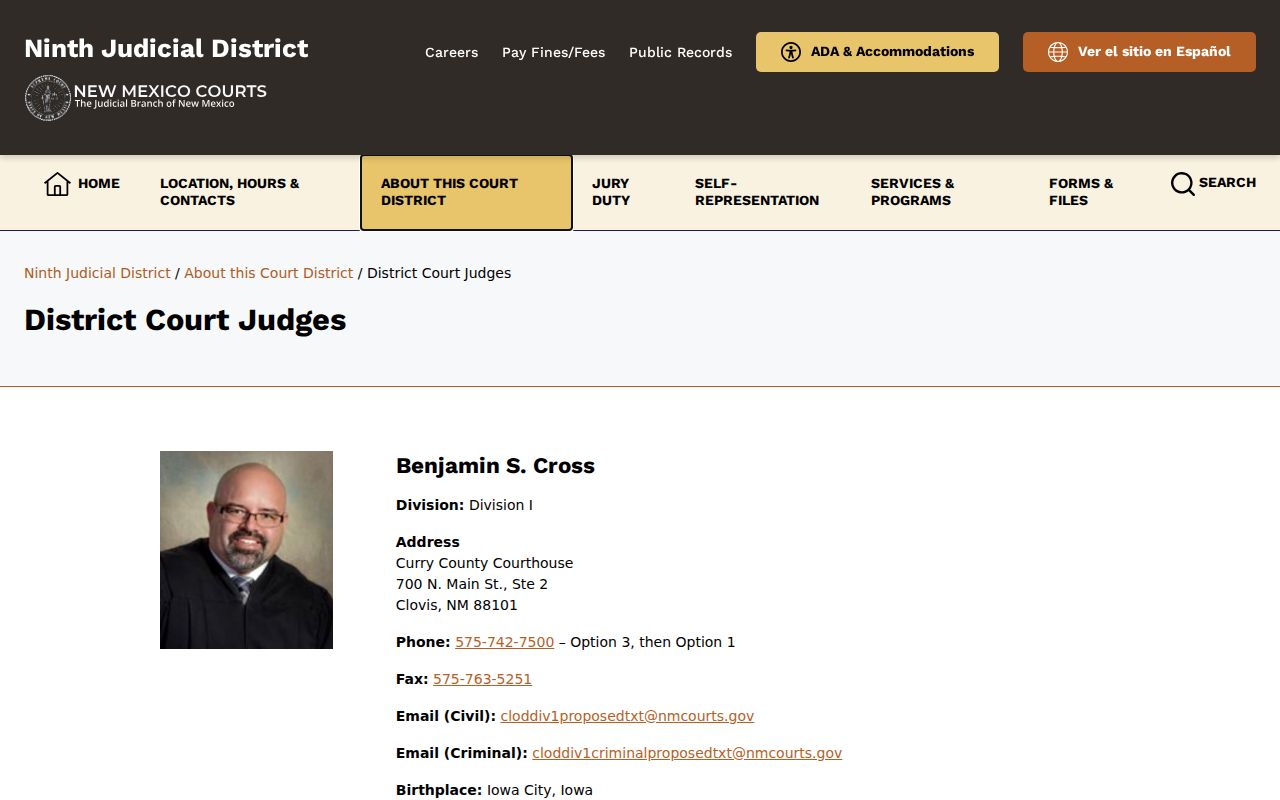
The District Court listing backs up the court-level split that sharpens a Curry County criminal docket search. The Magistrate Court judge listing gives the separate contact route for misdemeanor, DWI, traffic, and preliminary-hearing records. That office cannot stand in for the District Court clerk once a felony prosecution moves forward.
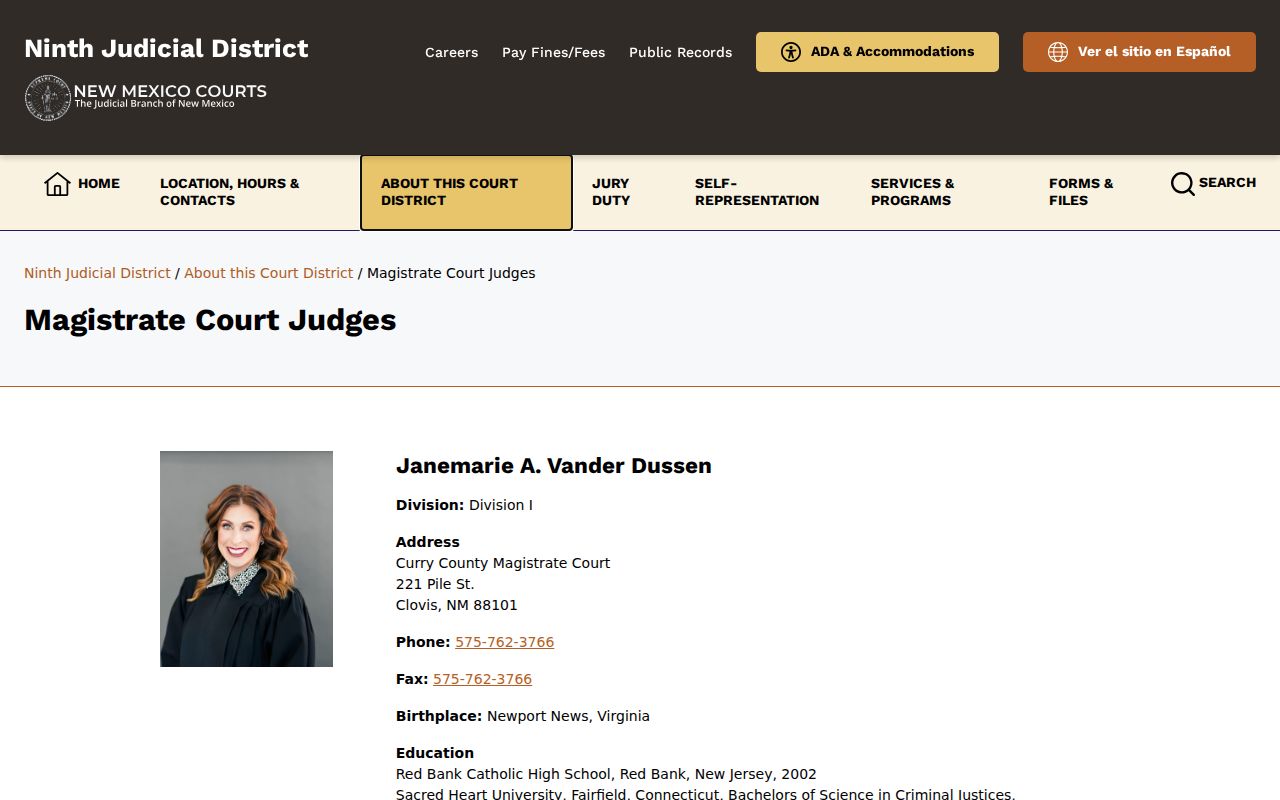
Curry County runs its criminal docket through separate channels. The Magistrate listing and the District listing each carry their own entries, so read them side by side rather than as one record. A Curry County preliminary docket, felony docket, misdemeanor docket, and municipal docket stay distinct; merging them into a single result invites confusion about where a case actually sits.
Criminal Case Stages on the Docket
Think of a Curry County criminal docket as a running log, not a single event. It gathers everything the court does in a case. Early on you may see a charging or filing entry, then an arraignment. Pretrial work follows, and eventually a plea or trial, a disposition, and sentencing. The order shifts with the charge and the court. A preliminary hearing can land in Magistrate Court before a felony moves to District Court. Municipal cases often stay with the city court from start to finish.
Docket flow: Filing → Arraignment → Pretrial → Plea or Trial → Disposition → Sentencing
A continuance, reset, or setting label does not end anything. It is just scheduling action. Pull the newest notice and check the date, the time, the court location, the hearing type, and any remote direction it gives. Later, the docket may add an order or a disposition. Even then, keep shorthand entries exactly as the court wrote them; guessing at a fuller meaning only misleads. A Curry County filing entry, arraignment, pretrial setting, and sentencing entry each play a different role on the docket.
Curry County Criminal Hearing Notices
The Ninth Judicial District's remote and hybrid hearing plan puts most criminal events in person. Jury trials and bench trials, pleas, preliminary matters, detention, probation revocation, sentencing, docket calls, extradition, pretrial conferences, evidentiary matters, and most motions all require a courtroom appearance. So confirm every Curry County criminal docket setting against the most recent notice. Notices differ by event. A trial notice, a plea notice, a detention notice, and a sentencing notice each carry their own directions.
Some hearings can still happen remotely. Arraignments, release-condition reviews, and status hearings are the usual candidates. The notice controls. Under the plan, a remote appearance needs a Google Meet link or a QR code printed in the notice itself. Without that, assume you appear in person. A schedule page is a decent lead. But the individual Curry County criminal docket and the clerk are where a changed setting gets confirmed. Compare Curry County remote directions, in-person directions, calendar listings, and notices case by case.
Note: A Curry County remote hearing link must come from the court notice. A calendar listing alone is never permission to appear remotely.
Curry County Criminal Docket Courts
Know the charge level first. Then pin down the court type before hunting for a Curry County criminal docket. District Court takes felony criminal matters. It also holds exclusive criminal appeals under the Ninth Judicial District overview. Magistrate Court handles misdemeanors, DWI and DUI matters, traffic cases, and felony preliminary hearings. Remember this. The court which first handled a matter may not hold the later felony prosecution entries. Curry County felony records, preliminary records, misdemeanor records, and appeal records can travel different court paths.
The municipal courts in Clovis, Texico, and Melrose handle petty misdemeanors, DWI or DUI, traffic, and municipal-ordinance matters. The state court overview notes, though, that municipal courts conduct no jury trials. The overview lists no Grady municipal contact. Confirm that information locally. Case Lookup carries only limited municipal data. That makes a city clerk the better source for a municipal docket. Keep Curry County municipal records, city clerks, Magistrate records, and District records separate in your search.
| Court | Criminal docket role | Best next channel |
|---|---|---|
| Curry County District Court | Felonies and criminal appeals | Case Lookup, District Court Clerk, Ninth schedule |
| Curry County Magistrate Court | Misdemeanors, DWI, traffic, felony preliminary hearings | Case Lookup, Magistrate clerk, Magistrate schedule |
| Municipal courts | Petty misdemeanors, traffic, DWI, and ordinances | Relevant city or village municipal clerk |
Curry County Criminal Docket Context
Curry County shares the Ninth Judicial District with Roosevelt County. So published workload figures describe the whole district. They are not Curry County numbers alone. The 2024 New Mexico Judiciary annual report counts 3,593 new, reactivated, and reopened Ninth District cases in FY2024. Adult criminal cases made up 37 percent of that workload. Civil matters took 58 percent, and juvenile criminal cases the remaining 5 percent.
The same report measures speed. It clocks average criminal district-case resolution at 198 days. That is six percent lower than the prior measure. It also sits below the statewide average. Treat these numbers as court-system context, not a forecast for any Curry County criminal docket. A district disposition rate above 100 percent is a throughput measure. It says nothing about outcomes in individual cases. Curry County docket dates, status labels, court notices, and case files stay case-specific.
Access Rules for Criminal Dockets
New Mexico presumes public access to court records. Yet Curry County criminal dockets and their documents can still be redacted, protected, confidential, sealed, or absent from online view. Rule 1-079 NMRA folds registers of actions and docket entries into its court-record definition while shielding specified personal identifiers and recognized confidential categories. One caution: a public docket line does not guarantee access to its attachment. The result can differ. Curry County public entries, redacted entries, sealed entries, and clerk requests can each lead to a different access outcome.
Access rules:
NMSA 1978, Section 14-2-1 et seq. provides the New Mexico Inspection of Public Records Act route for available public records.
Rule 1-079 NMRA addresses public access, protected identifiers, and sealing of court records.
Order 23-8500-007 sets the online Case Access Policy and its redaction limits.
Not everything sits in Case Lookup. Juvenile criminal cases stay out of it under the public-access guidance. Protection-order records follow separate rules. Files from before 1997 may live on paper, microfilm, or scans, or they may sit in an archive or another office. Instant results are unlikely. Expect an online request or a clerk inquiry. A narrow document request works best through the Ninth Judicial District records-request instructions, clerk inspection, or the IPRA form. Name the court, the case number, the document, and the date as precisely as you can. Curry County searches for older files, sealed records, juvenile matters, and document requests all reward careful court selection.
Curry County Criminal Docket Expungement
An expungement reshapes who can see a record. It does not wipe every internal file kept by the court or law enforcement. The New Mexico Courts expungement information lays out the split. Cannabis requests go through an online process. Other municipal, misdemeanor, and felony criminal-record requests need a petition filed with the court. The official form asks for a full case number, date of birth, and an uploaded ID. Any optional case documents can be attached too. So match each Curry County expungement request to the right court. A Curry County criminal docket number copied from the docket helps the clerk find the file fast.
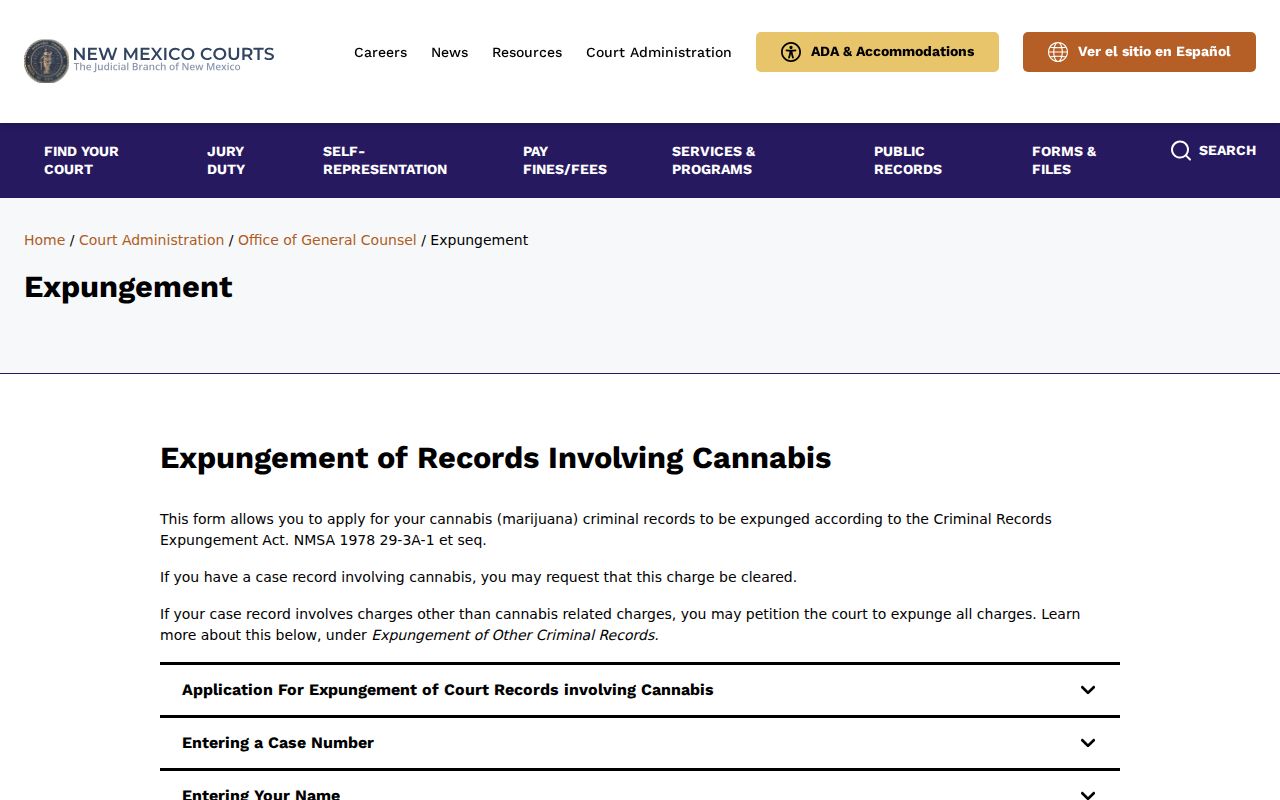
The form image shows why a Curry County criminal docket number should be copied exactly. Do this before an expungement request is prepared. The Department of Public Safety expungement materials cover the Criminal Records Expungement Act. They also explain the agency's own procedure. A blank search result can mean a sealed record. It could also signal a juvenile exclusion, older-file limits, a municipal-court split, or a simple name mismatch. It does not prove no Curry County criminal case was ever filed. The court docket itself stays with the clerk of court.
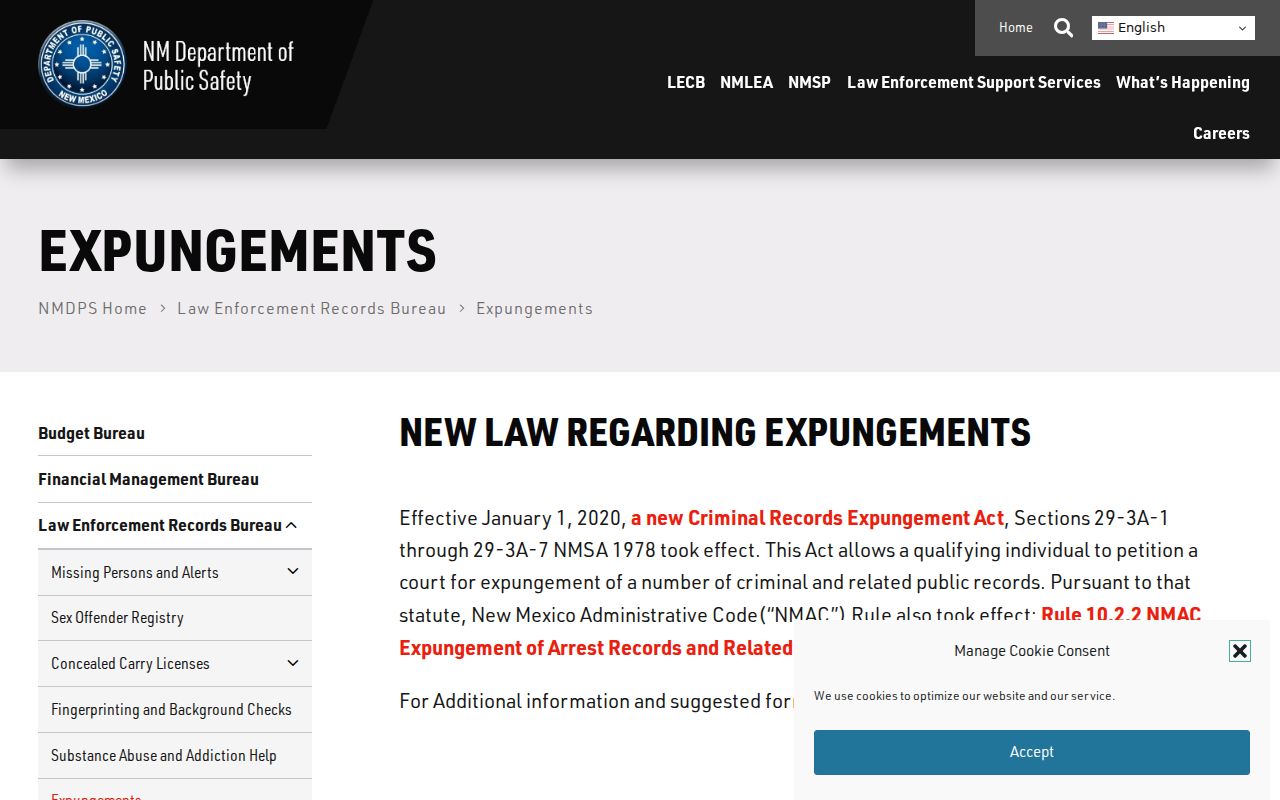
The DPS material is an agency-access reference. The Curry County criminal docket remains a court record held by the responsible court clerk.